CIP, allergens, and carryover risk when co-packers run juice, tea, and functional drinks on shared lines
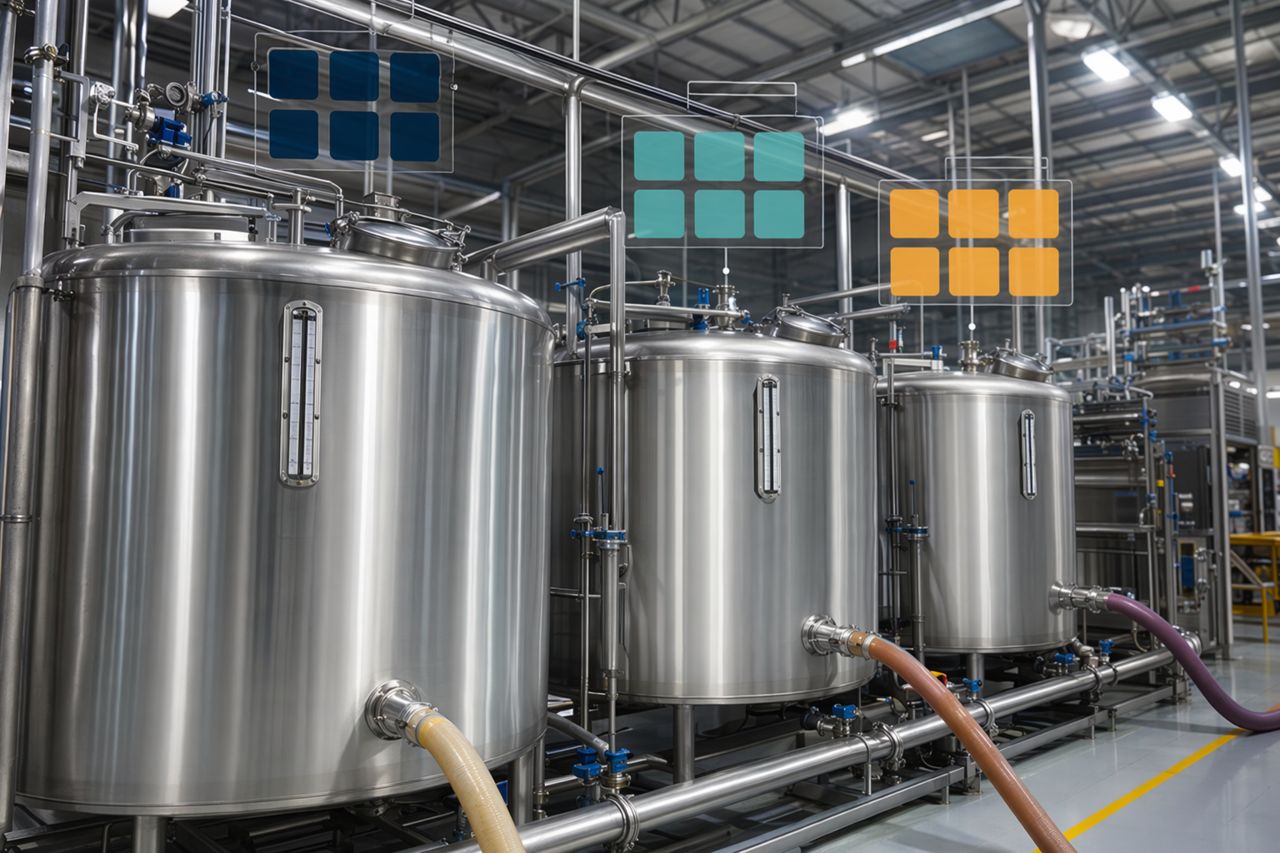
Shared beverage assets make money when they stay scheduled. They also make risk when one line moves from pulpy juice to brewed tea to a protein-forward functional drink with limited buffer time between campaigns.
For a contract beverage co-packer, the issue is not only whether the line is clean. The operational question is whether the line is predictably cleanable across SKUs, with documentation that holds up under customer, QA, and retailer pressure.
Enzyme selection can support that discipline. The right processing enzyme program can reduce the product-side burden before CIP starts by managing pectin, starch, protein, suspended solids, haze precursors, and viscosity contributors that otherwise load filters, cling to tank surfaces, or settle in dead zones. Enzymes do not replace validated allergen controls or sanitation verification. They can help make the product matrix more controllable so cleaning, filtration, and changeover windows behave with less surprise.
Enzyone works as an enzyme supplier for beverage co-packers that need plant-floor practical trials, batch documentation, and repeatable SKU transitions—not vague formulation advice.
Where carryover risk actually shows up
Carryover risk on a shared beverage line is rarely one dramatic failure. It is usually a stack of small, familiar problems:
- Residual pulp or fruit solids collecting in elbows, strainers, balance tanks, and filler bowls
- Protein or botanical films increasing rinse demand and inspection time
- High-viscosity juice blends dragging through hoses, plate heat exchangers, and transfer piping
- Tea tannins, gums, or plant extracts contributing to haze or surface staining
- Filter loading that changes from SKU to SKU, forcing operators to adjust mid-run
- Rework loops that keep a tank occupied when the next customer needs it released
- Documentation gaps when a customer asks why a changeover took longer than the last one
These are not laboratory problems. They are uptime, labor, water, chemical, and release-time problems.
Enzymes are not a sanitation shortcut
For allergen control, your plant still needs a validated program: line clearance, segregation, label verification, sanitation procedures, swab or rinse verification where required, and documented release criteria. No enzyme program should be presented as an allergen neutralizer or a substitute for your QA system.
The practical value of enzymes is upstream of sanitation. By changing how the beverage matrix behaves during batching, holding, transfer, and filtration, enzymes can reduce the soil profile the sanitation team has to remove.
That matters on shared lines because the best CIP program is easier to execute when the previous product does not arrive at the cleaning step as a sticky, hazy, slow-draining load.
Product soils that complicate shared beverage lines
Juice and fruit blends
Fruit systems can bring pectin structure, suspended pulp, starch carryover from fruit prep, and fiber fractions that build viscosity. These can slow tank turnover, foul filters, and leave residues in hard-to-rinse locations.
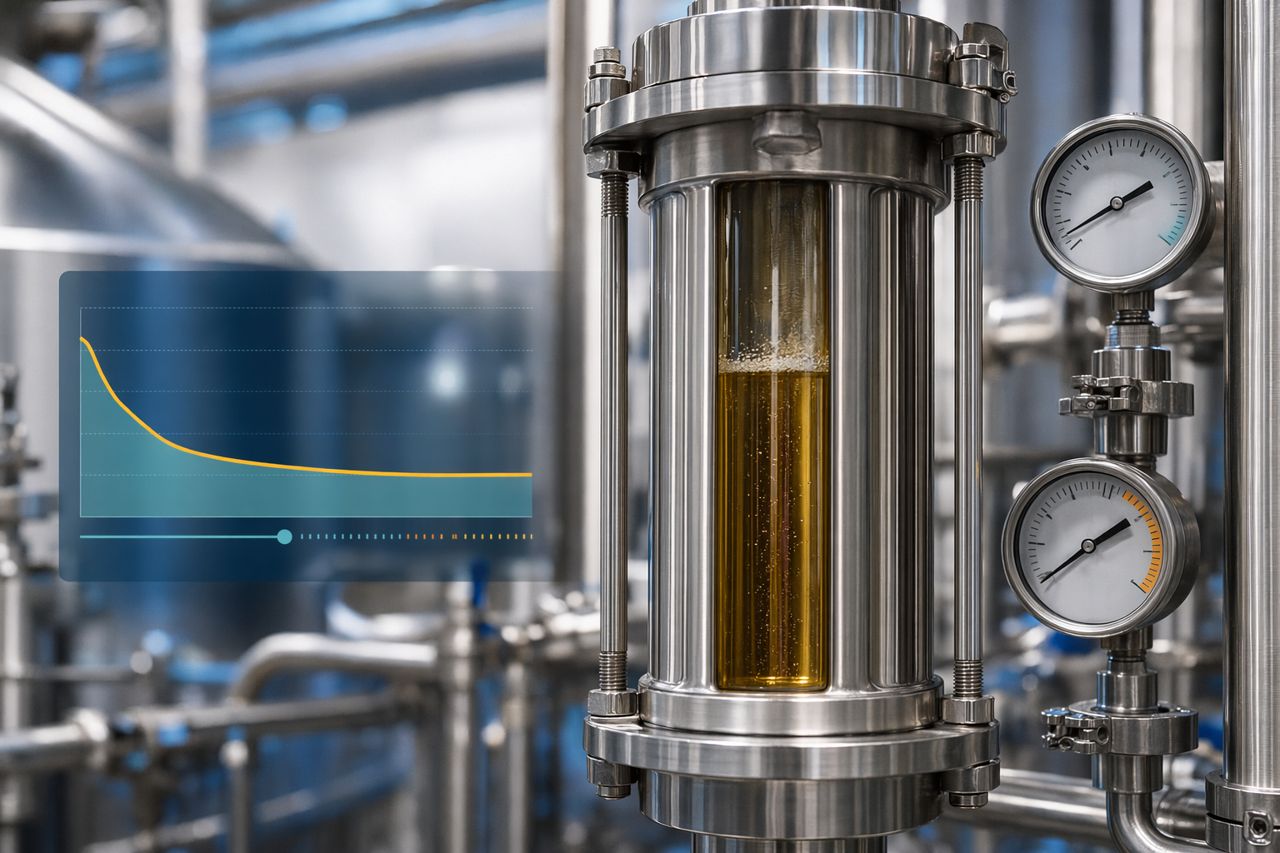
A targeted enzyme program may help by improving juice flow behavior, supporting clarification, reducing sludge burden, and making downstream separation more predictable.
Brewed tea and botanical drinks
Tea and botanical beverages often create a different kind of challenge: haze, extract variability, tannin interaction, sediment formation, and color staining. Co-packers may see the issue as a filtration or shelf-appearance problem, but the operational pain shows up as rework, longer hold times, and delayed release.
Enzyme use can be evaluated as part of a broader haze-control and clarification strategy, especially when multiple tea bases and botanical blends move through the same tanks.
Functional drinks
Functional beverages can include proteins, fibers, gums, fruit systems, flavors, colors, minerals, and sensitive actives. These SKUs can behave differently during heat treatment, cooling, and holding. Some create foam, some thicken, some drop sediment, and some load filters unexpectedly.
For these products, enzyme selection must be careful, documented, and aligned with the customer’s ingredient declaration, process conditions, and quality targets.
What plant managers should expect from an enzyme supplier
A co-packer does not need an enzyme vendor who only talks about biochemistry. The plant needs a supplier who understands how trial work affects production scheduling.
A credible enzyme supplier for beverage co-packers should support:
- Clear fit-for-purpose enzyme recommendations by SKU family
- Bench-to-plant trial planning that respects production constraints
- Practical dosing guidance without disrupting batching discipline
- Hold-time and temperature windows that operators can actually run
- Compatibility checks against pH, heat, preservatives, and customer requirements
- Documentation for trial objectives, observations, and decision points
- Support for QA review without overclaiming sanitation or allergen outcomes
The goal is not to add complexity. The goal is to reduce avoidable variability before the line reaches CIP.
Changeover discipline starts before the rinse
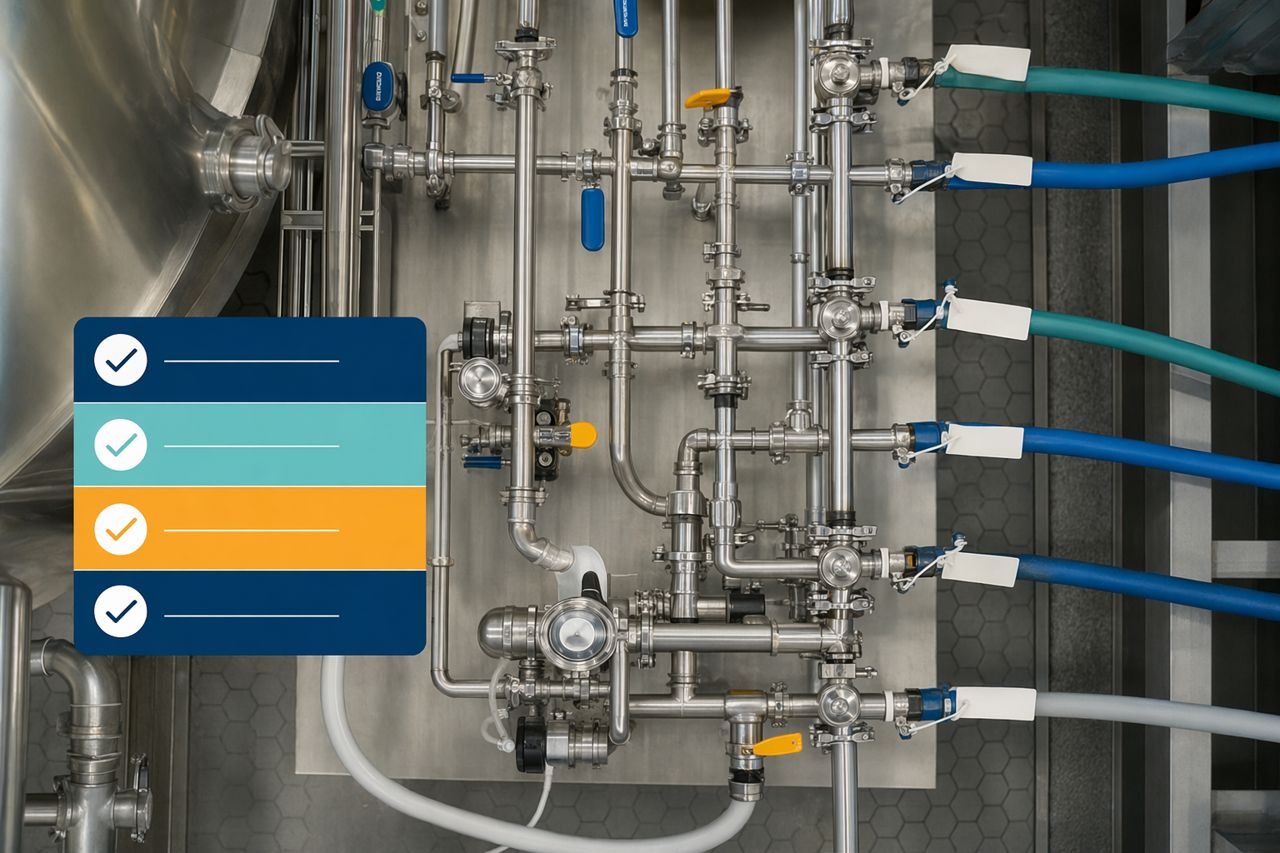
A strong shared-line program treats changeover as a process chain, not a cleanup event. Enzymes can support several links in that chain:
- Batching behavior — reducing viscosity spikes and improving dispersion where appropriate
- Tank turnover — helping product drain and transfer more consistently
- Filtration relief — lowering suspended or colloidal load before filters become the bottleneck
- Haze control — improving clarity targets where product design allows
- Residue reduction — limiting heavy product soils that complicate rinse and CIP verification
- Release confidence — creating trial documentation that helps operations and QA agree on next steps
When these links are controlled, changeovers become less dependent on heroic operator intervention.
Questions to ask before running an enzyme trial
Before adding any enzyme to a beverage co-packing workflow, define the business problem clearly. Useful questions include:
- Which SKU transition creates the most downtime or re-clean risk?
- Is the issue viscosity, haze, sediment, filter life, tank residue, or finished-product appearance?
- Which tanks, hoses, filters, or filling components show the most carryover concern?
- Does the customer allow the proposed processing aid or ingredient strategy?
- What process conditions are fixed because of pasteurization, cold-fill, hot-fill, or aseptic handling?
- What will operators measure during the trial: transfer time, filter differential pressure, turbidity trend, tank inspection, rinse condition, or release timing?
- What will define success before the trial starts?
A trial without operational success criteria becomes a debate. A trial with defined plant metrics becomes a decision.
Documentation matters as much as dose
In co-packing, the enzyme itself is only part of the value. Documentation is what allows the plant to repeat the result and defend the process.
For shared beverage lines, trial records should capture:
- SKU, batch size, and product family
- Process point where enzyme was introduced
- Time and temperature conditions during treatment
- Observed changes in viscosity, clarity, sediment, transfer, or filtration behavior
- Any impact on sensory, color, or customer quality targets
- Changeover observations after the run
- QA review notes and customer constraints
- Decision: adopt, adjust, reject, or re-test
This is how enzyme work moves from an interesting sample to an operational tool.
What enzymes can and cannot claim in allergen-sensitive environments
Enzymes may help reduce product residues that contribute to cleaning difficulty. They may improve how certain beverage matrices drain, clarify, or filter. They may support more consistent pre-CIP conditions.
They should not be positioned as eliminating allergen risk by themselves. Allergen control remains a validated plant program. If a line runs dairy proteins, nut-derived ingredients, soy components, gluten-containing materials, or other declared allergens, the sanitation and verification plan must stand on its own.
The practical role for enzyme support is to make the product side more manageable so the sanitation program has fewer surprises to fight.
Build the enzyme program around the schedule
Co-packers live by the production calendar. Any enzyme recommendation has to fit real plant constraints: limited tanks, customer priority changes, raw material variability, tight labor windows, and the pressure to release the line for the next SKU.
Enzyone approaches beverage enzyme supply around the operating reality of multi-SKU plants. We focus on predictable trials, clean documentation, and enzyme choices tied to measurable production value: filtration relief, viscosity management, haze control, tank behavior, and changeover confidence.
Request a quote for a beverage co-packing enzyme program
If your shared lines are losing time to slow filtration, viscous transfers, haze rework, or difficult changeovers, send us the SKU family, process conditions, and target outcome.
Request a quote through the on-site contact form and Enzyone will help scope an enzyme recommendation and trial plan built for beverage co-packing operations.