Amylase and Cellulase for Beverage Raw Material Variability
When fruit, grain, botanical, tea, and functional beverage inputs change, the line feels it first: slower tank turns, inconsistent viscosity, filter loading, haze creep, pulp settling, or fill-weight variation. Switchyard Catalytics supplies amylase and cellulase systems built for contract beverage co-packers that need predictable processing across multi-SKU schedules.
We help plant teams use enzymes as operational controls—not as science projects. The goal is straightforward: bring variable raw materials back inside a manageable processing window so batching, holding, filtration, and filling stay disciplined.
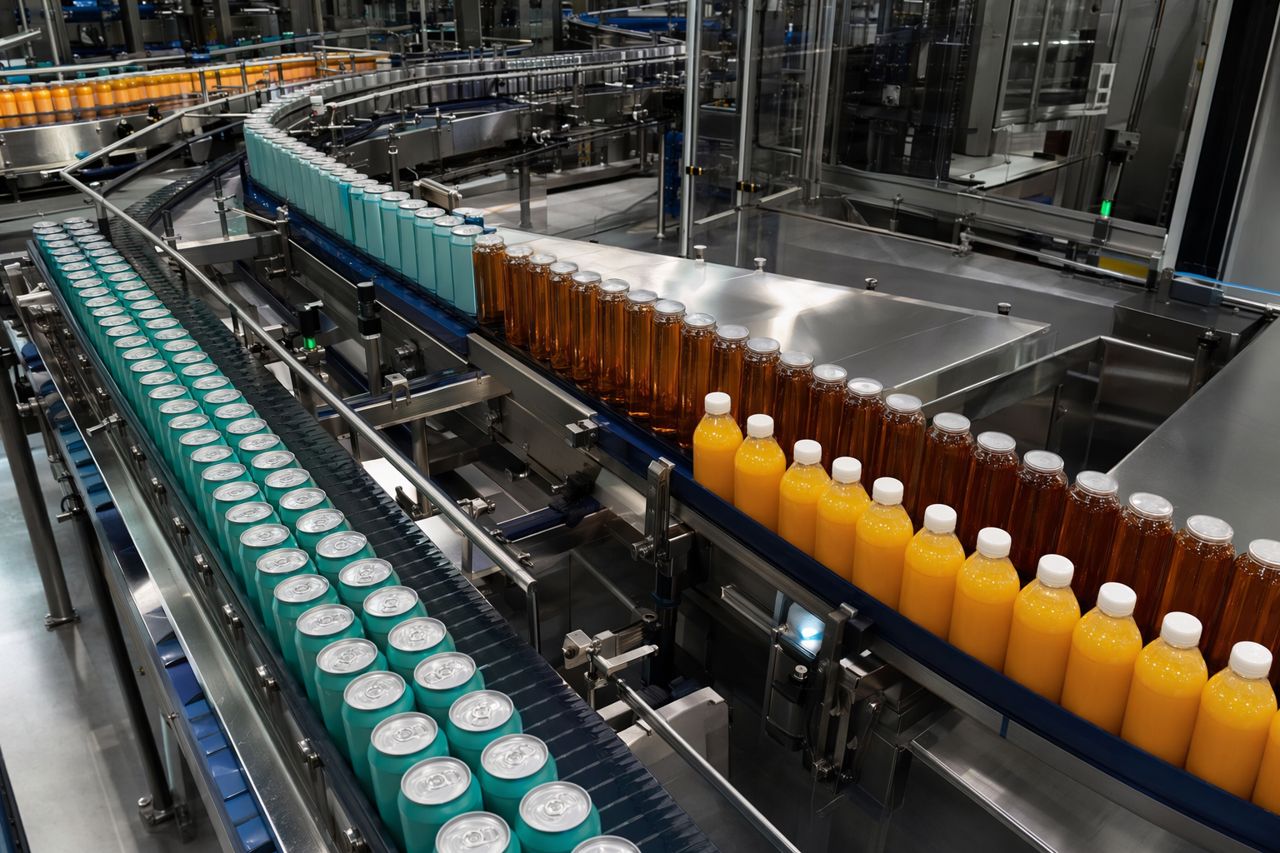
Primary fit: beverage co-packers running juice blends, teas, grain-based drinks, botanicals, functional beverages, concentrates, syrups, and high-solids bases where starch, fiber, pulp, or viscosity can disrupt throughput.
Enzyme supplier for beverage co-packers dealing with raw material drift
Raw material variability does not always arrive with a warning label. A fruit lot may carry more pulp. A botanical extract may drag filtration. A grain syrup may thicken during hold. A seasonal blend may haze after thermal processing. A new customer formulation may run fine in benchtop review but behave differently in a production tank.
Amylase and cellulase can help convert that variability into a more predictable process.
Where amylase helps
Amylase targets starch-related processing friction. In beverage co-packing, that can mean:
- Reducing starch-driven viscosity in grain, cereal, tea, coffee, and functional drink bases
- Improving tank mixing and pumpability before filtration or pasteurization
- Reducing starch haze risk in certain plant-based or botanical formulations
- Supporting more consistent flow behavior during batching and transfer
- Helping prevent slowdowns caused by thick, variable, or partially gelatinized inputs
Where cellulase helps
Cellulase supports fiber and cell-wall related challenges in fruit, vegetable, botanical, and plant-derived beverage systems. It can help with:
- Pulp and fiber breakdown for more manageable tank behavior
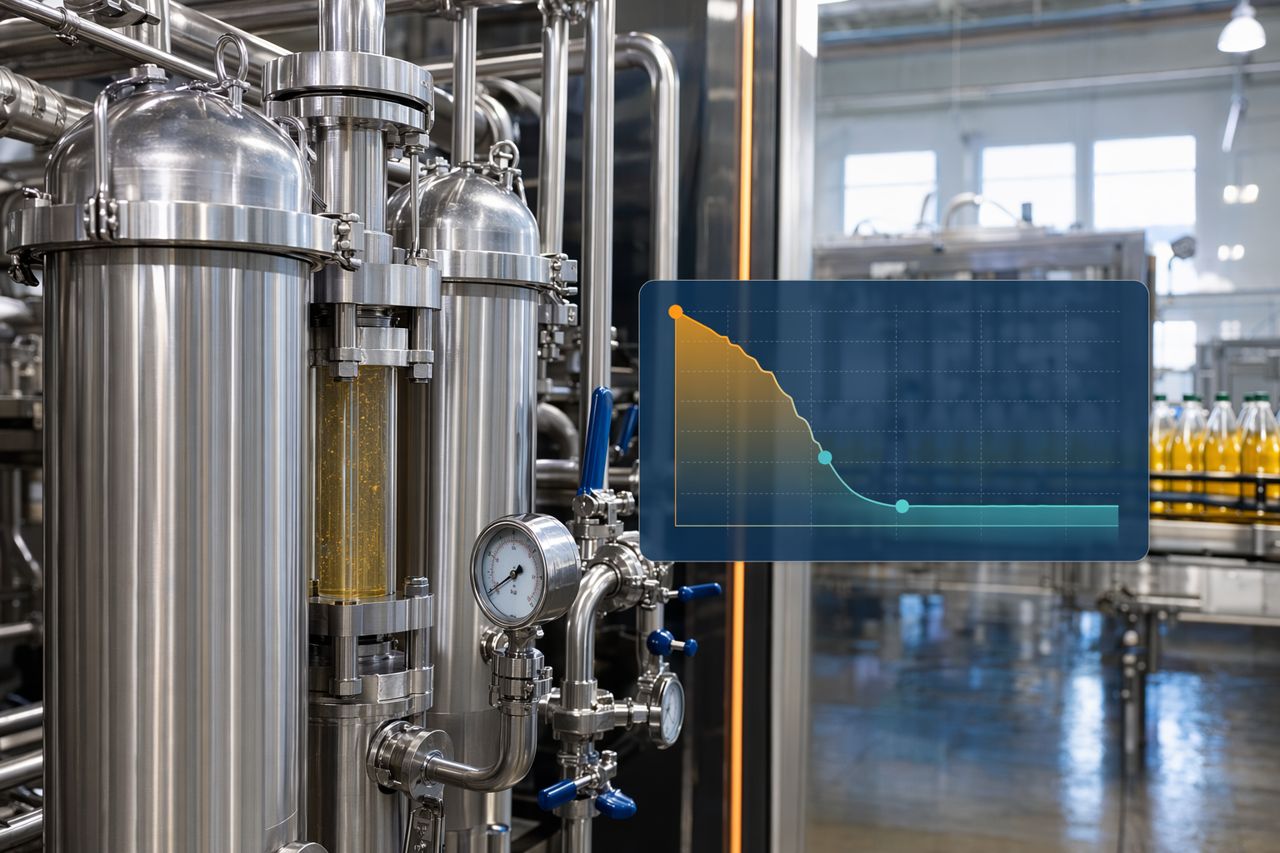
- Filtration relief when suspended solids overload screens or membranes
- Improved extraction from fruit, botanical, or plant material where applicable
- Reduced settling pressure in pulpy or high-fiber beverage bases
- More consistent viscosity across seasonal lots
Where combined amylase-cellulase programs help
Many co-packer problems are not purely starch or purely fiber. Blended inputs often carry both. A coordinated amylase and cellulase approach can support:
- Multi-ingredient beverages with grain, fruit, botanicals, and sweetener systems
- Juice blends with pulp plus starch-bearing adjuncts
- Functional beverages where mouthfeel targets conflict with filtration speed
- Seasonal SKUs that change behavior from one truckload to the next
- Trial work where the plant needs a disciplined decision path, not endless reformulation
Built around uptime, changeover discipline, and documentation
Co-packers do not have unlimited time to investigate every troublesome formulation. Switchyard Catalytics supports practical enzyme trials that fit plant realities.
Our programs are designed around:
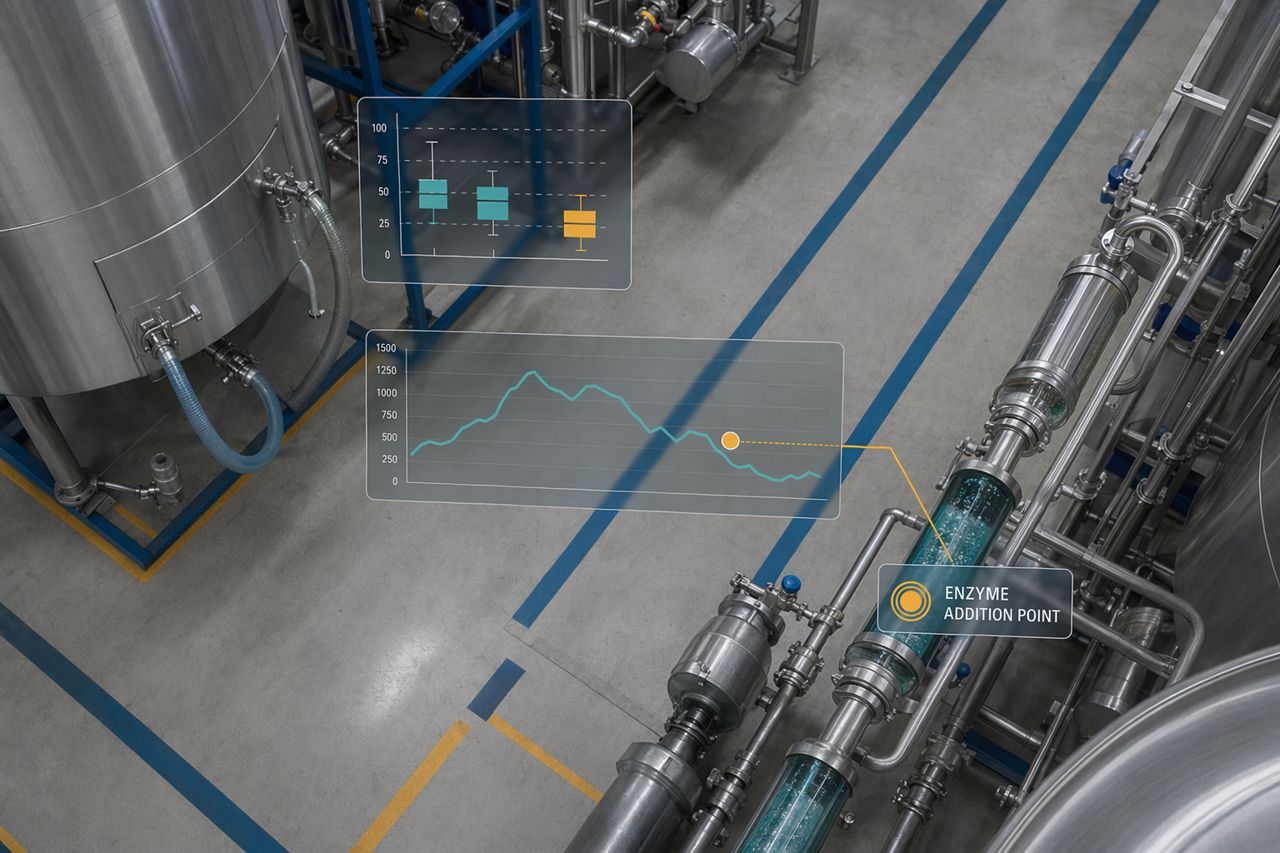
- Defined processing windows: temperature, hold time, pH range, addition point, and mixing expectations
- Dose ladder trials: structured side-by-side evaluation without overcomplicating the production schedule
- Tank behavior checks: viscosity trend, mixing quality, foam tendency, settling, and transfer performance
- Filtration observation: pressure rise, flow decline, filter change frequency, and solids burden
- Finished beverage review: haze, mouthfeel, color impact, flavor neutrality, sediment behavior, and customer specification fit
- Production documentation: lot traceability, recommended handling, trial notes, and scale-up guidance
No vague biotech promises. The question is whether the enzyme program helps the line run cleaner, faster, and more predictably while protecting finished-product requirements.
Common beverage co-packer use cases
Thick or slow-moving beverage bases
When a base drags through pumps, holds heat unevenly, or slows transfer, viscosity management becomes a scheduling issue. Amylase can reduce starch-related thickening. Cellulase can reduce fiber-driven body. The right program depends on what is creating the resistance.
Filter loading and short run lengths
If filters blind early or differential pressure climbs too quickly, enzymes may reduce the suspended or colloidal load before the beverage reaches the filtration step. For co-packers, that can mean fewer interruptions, more predictable run lengths, and cleaner handoffs between batching and filling.
Haze and sediment risk
Some haze comes from starch, pulp, cell-wall material, or unstable plant solids. Enzyme treatment can be evaluated as part of a haze-control plan, especially when the issue appears only with certain raw material lots or customer SKUs.
Seasonal fruit and botanical variability
Fruit maturity, extraction conditions, supplier changes, and harvest timing can change pulp, fiber, soluble solids, and viscosity. Cellulase and amylase programs give the plant a controlled way to respond without reworking the entire process every season.
New SKU scale-up
A formulation that looks stable in a lab sample can behave differently in a production tank. Switchyard Catalytics helps co-packers screen enzyme options before the first full-scale run creates line pressure, rework, or customer escalation.
How we support a plant trial
1. Process intake
We start with the practical details: beverage type, raw materials, solids load, batch size, temperature profile, pH range, hold time, filtration method, pasteurization step, and the specific symptom slowing the line.
2. Enzyme selection
We recommend an amylase, cellulase, or combined approach based on the likely cause of the issue and the constraints of your process.
3. Trial plan
We provide a concise trial structure that can be executed by production or QA teams: when to add, how long to hold, what to observe, and how to compare treated and untreated samples.
4. Scale-up review
We help translate bench or pilot findings into a production decision, with attention to line speed, tank scheduling, filtration load, sensory fit, and documentation needs.
5. Supply continuity
For recurring SKUs, we support repeatable supply planning so enzyme availability does not become another changeover risk.
What buyers should expect from Switchyard Catalytics
- Direct technical conversations with beverage processing context
- Enzyme recommendations matched to real line constraints
- Trial guidance that respects production time
- Documentation suitable for customer, QA, and procurement review
- Quote support for recurring programs, pilot runs, and seasonal demand
- No unnecessary complexity, no store-driven handoff, no generic catalog push
Request a quote
If starch, fiber, pulp, viscosity, filtration load, or haze risk is slowing a beverage line, send us the process details and target outcome. We will recommend an amylase, cellulase, or combined enzyme path for evaluation.
Use the on-site request a quote form and include:
- Beverage type and key raw materials
- Current processing challenge
- Batch size or expected run volume
- Temperature and pH range if available
- Filtration or clarification method
- Desired trial timing
FAQ
Do you support co-packers running many different beverage SKUs?
Yes. Our recommendations are built for multi-SKU environments where changeover discipline, documentation, and predictable trial execution matter.
Can amylase and cellulase be used together?
Often, yes. Many beverage bases contain both starch-related and fiber-related contributors to viscosity, haze, or filtration load. We can help structure a trial to determine whether one enzyme or a combined program is the better fit.
Will enzymes change flavor or mouthfeel?
The target is process improvement while protecting the finished beverage profile. Sensory review should be part of every trial, especially for premium, functional, or customer-owned formulations.
Can you help with seasonal raw material changes?
Yes. Seasonal variability is one of the main reasons co-packers evaluate enzyme programs. A documented approach can help the plant respond faster when the next lot behaves differently.
Do you provide trial documentation?
Yes. We can support trial notes, handling guidance, addition-point recommendations, and scale-up considerations for production, QA, and procurement review.