From Bench Trial to First Commercial Run: Documentation Habits That Reduce Beverage Co-Packer Disputes
For a contract beverage co-packer, enzyme work is rarely just a formulation question. It is an operations question.
A bench trial may show cleaner extraction, lower viscosity, faster filtration, or better haze behavior. But if the result is not translated into tank-ready instructions, the first commercial run can turn into a dispute over what was promised, what was changed, and who approved the change.
Switchyard Catalytics works as an enzyme supplier for beverage co-packers that need trials to behave like plant events: documented, repeatable, and ready for QA review.
This article outlines the documentation habits that reduce friction between R&D, the brand owner, QA, production, and procurement before enzyme chemistry reaches line time.
Why beverage enzyme trials become commercial-run disputes
Most disputes do not come from one dramatic failure. They come from missing context.
Common gaps include:
- A bench sample looked right, but the production tank had a different solids load or mixing pattern.
- The enzyme was added at a different point in the batching sequence.
- Hold time was shortened to protect the line schedule.
- Filtration performance improved in the lab but was not tracked against plant equipment behavior.
- The brand owner judged haze, color, or mouthfeel differently than the co-packer expected.
- QA did not have a clear sample map or signoff trail.
- Procurement approved a material, but operations never approved the operating window.
None of these are unusual in a multi-SKU co-packing environment. The fix is not more paperwork for its own sake. The fix is documentation that reflects how the plant actually runs.
Start with a trial brief that names the operating problem
A useful enzyme trial brief should not begin with “test enzyme.” It should begin with the production constraint.
Examples:
- Reduce viscosity before filtration on a juice blend.
- Improve tea extraction consistency without extending tank hold.
- Stabilize haze behavior in a functional beverage with botanical solids.
- Improve yield from fruit or vegetable components before blending.
- Reduce filter loading during a high-changeover production week.
The trial brief should capture:
- SKU name and product family.
- Current process pain point.
- Target production benefit.
- Enzyme role in the process.
- Decision owner from the brand.
- Decision owner from the co-packer.
- Required samples, checkpoints, and approval criteria.
When the operating problem is named early, the commercial team does not have to reverse-engineer the purpose of the enzyme after the trial.
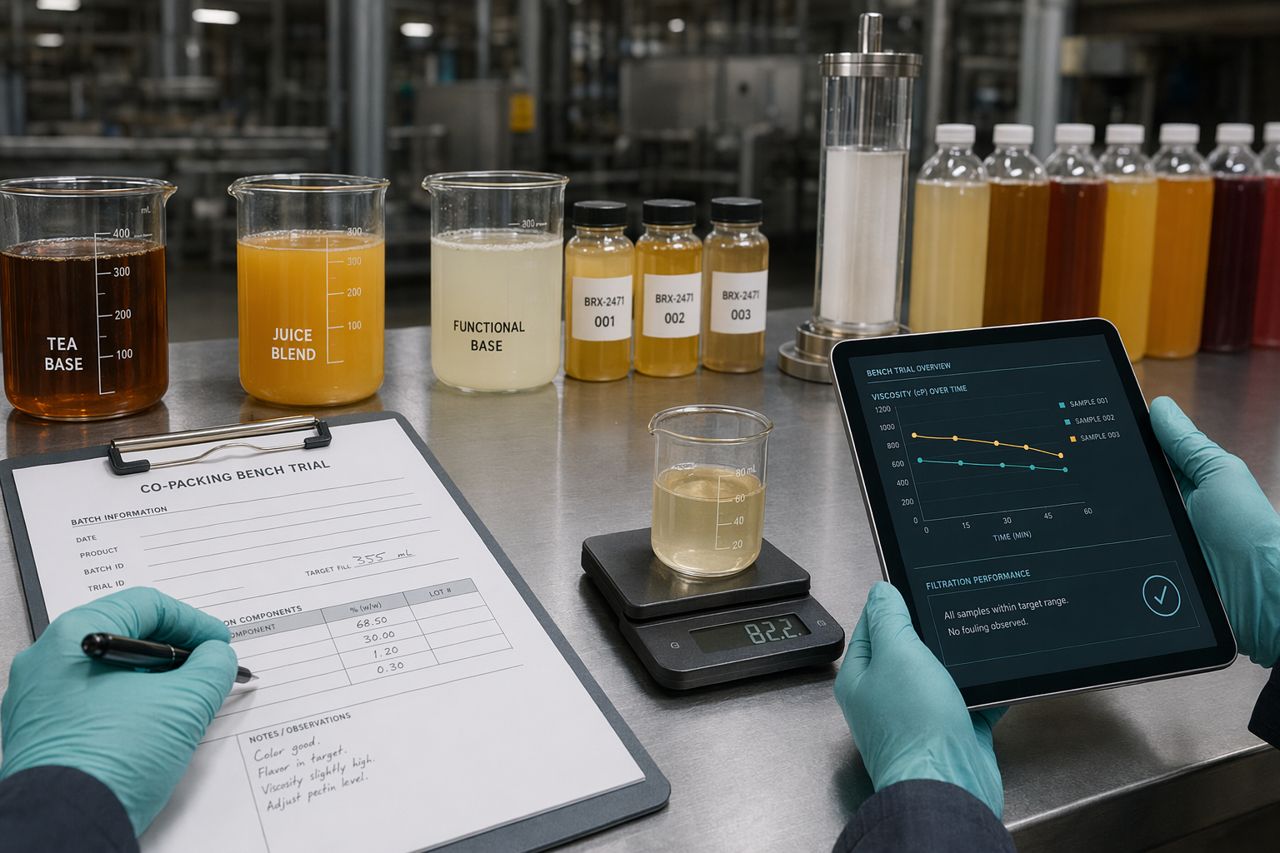
Document the bench trial in production language
A bench trial record should be readable by a plant manager, not just by a formulator.
Include the details that affect scale-up:
- Ingredient lot references.
- Brix, solids, pulp load, botanical load, or other relevant product descriptors.
- Mixing order.
- Enzyme addition point.
- Temperature condition used for the trial.
- Hold window used for the trial.
- Agitation assumptions.
- Visual observations at each checkpoint.
- Viscosity trend if viscosity is part of the problem.
- Filtration behavior if filter loading is part of the problem.
- Haze or settling behavior if appearance is part of the problem.
- Sensory or mouthfeel notes if the enzyme can affect texture.
Do not let the bench record become a photo album of “before” and “after” jars. The commercial team needs to know how the result was created.
Define what success means before the pilot
Before pilot work begins, align on what will be considered a pass, a conditional pass, or a fail.
A beverage co-packer should not commit production capacity based on a vague statement like “filtration improved” or “sample looked cleaner.”
Better success criteria include:
- Product can move through downstream filtration with reduced pressure escalation.
- Tank discharge remains within the plant’s workable viscosity window.
- Haze target is acceptable after the agreed rest period.
- Product can complete the enzyme hold without disrupting the planned changeover block.
- No unexpected color shift appears during the trial window.
- QA sampling is sufficient for brand approval.
- Operator instructions are simple enough to execute during normal production.
Success criteria should be documented in the trial protocol, not negotiated after the result is in dispute.
Translate the bench result into a tank instruction set
A bench beaker has forgiving geometry. A production tank does not.
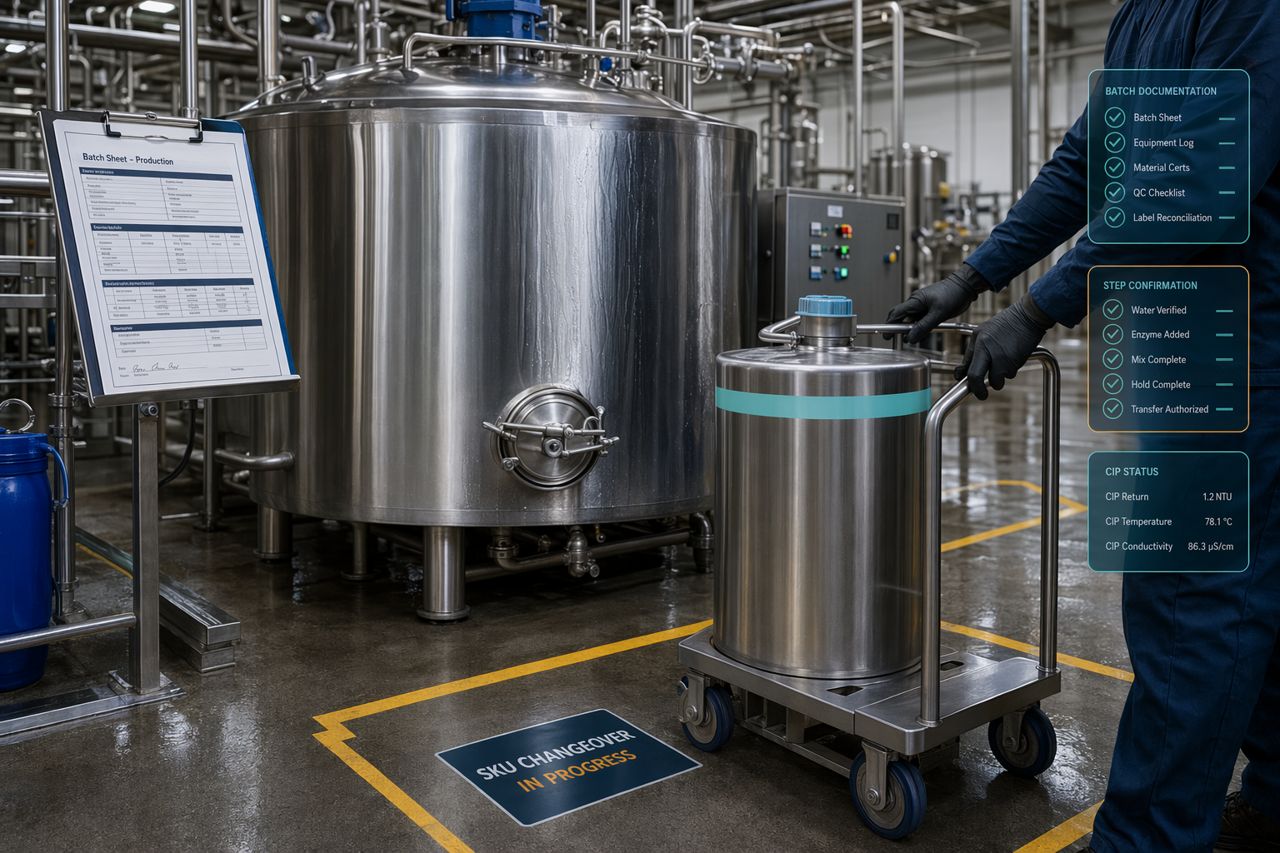
Before the first commercial run, the enzyme plan should be converted into a batching instruction set that operators can follow without interpretation.
That instruction set should define:
- Where the enzyme is staged.
- Who releases it to production.
- When it is added in the batch sequence.
- What mixing condition is required before addition.
- What the hold window is.
- What observation points are required during the hold.
- When downstream processing is allowed to begin.
- What exception triggers a production or QA call.
This is where many disputes are avoided. Operators should not have to guess whether an enzyme is treated like a minor ingredient, a processing aid, or a timed process step. The batch sheet should make that clear.
Protect changeover discipline
Co-packers live and die by changeover discipline. Enzyme steps must fit the schedule rather than create an invisible schedule risk.
Before approval, document:
- Whether the enzyme step affects tank availability.
- Whether the hold window overlaps with CIP planning.
- Whether the SKU has carryover concerns for the next product family.
- Whether allergen, organic, non-GMO, vegan, kosher, halal, or customer-specific documentation affects scheduling.
- Whether operators need special staging instructions.
- Whether waste handling or rinsing procedures need adjustment.
This matters most in plants running teas, juices, functional drinks, coffees, botanicals, drink bases, and seasonal limited-time SKUs in the same week. An enzyme trial that ignores changeover reality can look successful in isolation and still be rejected by production.
Build a first-run packet, not just a formula note
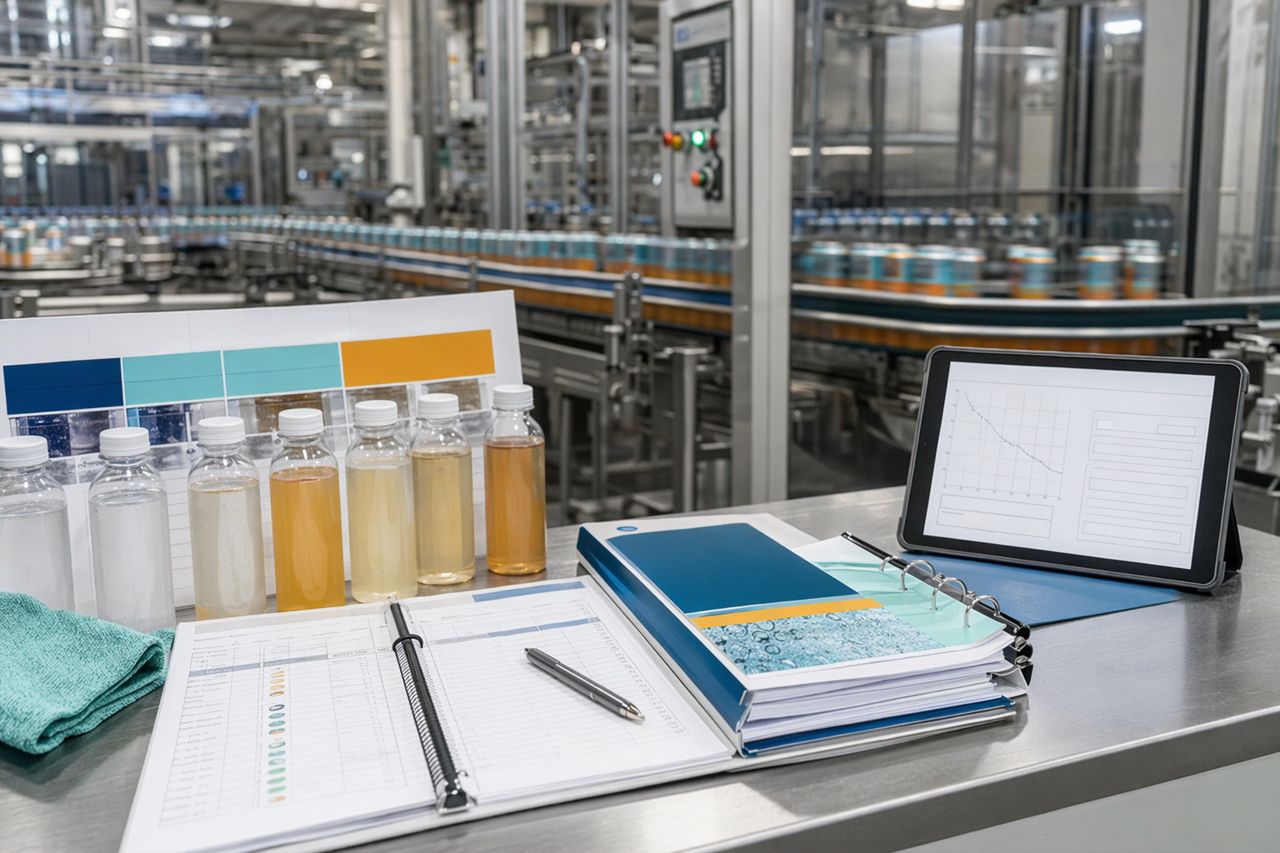
For the first commercial run, create a packet that travels with the batch.
A strong first-run packet includes:
- Approved trial brief.
- Bench and pilot summary.
- Final enzyme selection.
- Current product formula reference.
- Batch sheet language.
- Enzyme staging and addition instruction.
- Hold and release criteria.
- Sample map.
- QA signoff path.
- Deviation or exception log.
- Brand-owner approval contact.
- Post-run review template.
This packet gives every stakeholder the same facts. It also protects the co-packer if a brand owner later questions whether the commercial process matched the approved trial.
Record tank behavior, not just final appearance
Final samples matter, but they do not tell the whole production story.
For enzyme-supported beverage processing, the most useful records often come from the tank and filtration system:
- Did the batch mix uniformly before enzyme addition?
- Did viscosity shift at the expected point in the process?
- Did filtration load more slowly than the control or previous run?
- Did the product settle faster or slower than expected?
- Did haze change during hold or after transfer?
- Did the enzyme step create any delay for filling or packaging?
- Did operators need an adjustment that was not listed in the batch sheet?
These observations help decide whether the process is ready for repeat production, needs a revised operating window, or should remain in trial status.
Use exception logs to prevent blame loops
An exception log is not a failure record. It is a control tool.
If a commercial run deviates from the approved trial path, record it clearly:
- Ingredient lot change.
- Tank change.
- Mixing delay.
- Temperature drift.
- Shortened hold.
- Filter change.
- Late addition.
- Rework decision.
- QA hold.
- Brand-owner instruction.
When exceptions are captured in real time, the post-run review becomes factual. Without them, teams often argue from memory while the next SKU is already moving toward production.
Post-run review: decide, revise, or stop
After the first commercial run, do not leave the enzyme process in limbo.
Hold a short review and classify the result:
- Approved for repeat production: batch sheet and QA records are updated.
- Approved with revision: operating window, addition point, hold window, or sampling plan changes before the next run.
- Trial remains open: more production data is required.
- Not approved: enzyme step is removed or re-scoped.
The goal is to keep enzyme use from becoming tribal knowledge. If the first run worked, lock it in. If it did not, document why before another production slot is committed.
What Switchyard Catalytics helps co-packers standardize
Switchyard Catalytics supports beverage co-packers that need enzyme programs to survive real production conditions.
We help teams structure enzyme trials around:
- Clear production objectives.
- SKU-specific operating windows.
- Practical batch-sheet language.
- Filtration and viscosity relief targets.
- Haze and settling observations.
- First-run documentation packets.
- QA-ready supplier documentation.
- Repeat-run review habits.
For co-packers, the value is not just better enzyme selection. It is less ambiguity when a brand owner asks what happened in the tank, what changed from bench to scale, and whether the next run can be scheduled with confidence.
Request a quote for your next documented enzyme trial
If your plant is preparing a new beverage SKU, reworking a difficult filtration step, or trying to reduce viscosity or haze surprises before commercial production, Switchyard Catalytics can help scope the enzyme trial and documentation package.
Request a quote through the on-site contact form and include the SKU type, current process constraint, target production window, and any first-run timing requirements.